How many restrooms does a race need?
Course size drives the number, but so does layout. A start line with 500 people milling around for twenty minutes needs more capacity than a finish chute where runners keep moving. OSHA's construction ratio in 1926.51(c)(1) is written for job sites, not races, but it is the standard most event planners lean on absent a race-specific rule: one toilet for every 20 people at moderate density, scaling up from there. For a marathon that means clusters, not one big bank of units. Put 3 to 4 standard units at the start, 2 to 3 at each major aid station, and the largest grouping at the finish where runners linger for water, medals and photos. A half marathon through Vacaville with a shared start and finish can often reuse the same cluster for both, which cuts delivery trips. If your course runs near Elmira, 3.9 miles east, or loops toward Suisun City, 11.7 miles south, tell us the mile markers and we will place units where the crowd actually stands, not just where a truck can park. Races with big spectator turnout should also add at least one ADA accessible unit at the finish, since spectators in wheelchairs or with mobility gear need a route with a 60 inch turning circle per ADA Standards section 304.3.1 and a clear path at least 36 inches wide under section 403.5.1. We can also bring a restroom trailer for VIP or elite-runner areas if your race has sponsors expecting something nicer than a standard stall.
What does race restroom rental cost?
Pricing depends on unit count, event length and how much power or lighting the site needs. A single-day race is usually billed at the event or weekend rate, not a full week, even if setup happens the night before.
| unit | duration | typical price |
|---|---|---|
| standard | event | 400 |
| standard | weekend | 250 |
| ada | weekend | 240 |
| trailer | event | 3500 |
| delivery_fee | weekend | 200 |
These are typical figures from measured rental data, not quotes; see porta potty rental cost for the full price bands and restroom trailer rental cost if you are considering a trailer for a headline event. Races that run early morning to afternoon, like most Vacaville road races, tend to land closer to the weekend rate than the full event rate, since setup and teardown happen inside a single day. If your race benefits a nonprofit or draws a big field, ask about bundling handwashing stations into the same delivery run, since 29 CFR 1910.141(d)2 requires soap and towels or a hand-drying device at washing facilities, and a single combined delivery keeps the fee down. Courses that finish at a park or fairground sometimes need temporary fencing to route foot traffic around the restroom cluster, and that is priced separately from the units themselves.
How to power lights and aid stations along the course?
Night races, pre-dawn starts and finish-line stages need power for lighting, PA systems and sometimes a medical tent. A temporary power pole is the standard answer when the course runs near an electrical drop, and a light tower fills in where there is none. If you are asking how to brace a temporary power pole for an outdoor event, the short answer is: anchor it in ground that has been checked for slope and stability, keep the base clear of runner and vehicle paths, and route any cords so they do not cross the course. OSHA's illumination guidance in 1926.56(a) sets minimum lighting for work areas, and race organizers often use it as a benchmark for aid stations and finish areas after dark. Pair the pole or tower with GFCI protection consistent with 1926.404(b)(1)(ii) anywhere cords run near water stations or wash areas. For multi-day festivals held alongside a race weekend, see festival restroom rental and concert restroom rental for layouts that combine stages, vendors and restrooms in one footprint.

How far in advance should we book?
Book 4 to 6 weeks out for a race under 1,000 runners, longer for anything with road closures or multiple aid stations. Vacaville Porta Pros needs lead time to confirm counts, delivery windows and any ADA unit placements before race morning.
Do we need an ADA unit even for a small local race?
Yes. ADA Standards section 213.2 requires at least one accessible unit whenever single-user units are clustered, no matter how small the field is. Skipping it is a common oversight for first-time race organizers in Vacaville.
Can restrooms be moved mid-race if the course changes?
Not easily once runners are on course. We place units based on your final map, so lock the route before delivery day. Minor tweaks to aid station spacing are fine if flagged early.
What is the difference between event and weekend pricing?
Event pricing covers longer setups tied to a single large occasion, while weekend pricing fits a one or two-day race with simple delivery and pickup. See the porta potty rental per day page for daily comparisons.
Do runners need handwashing stations too?
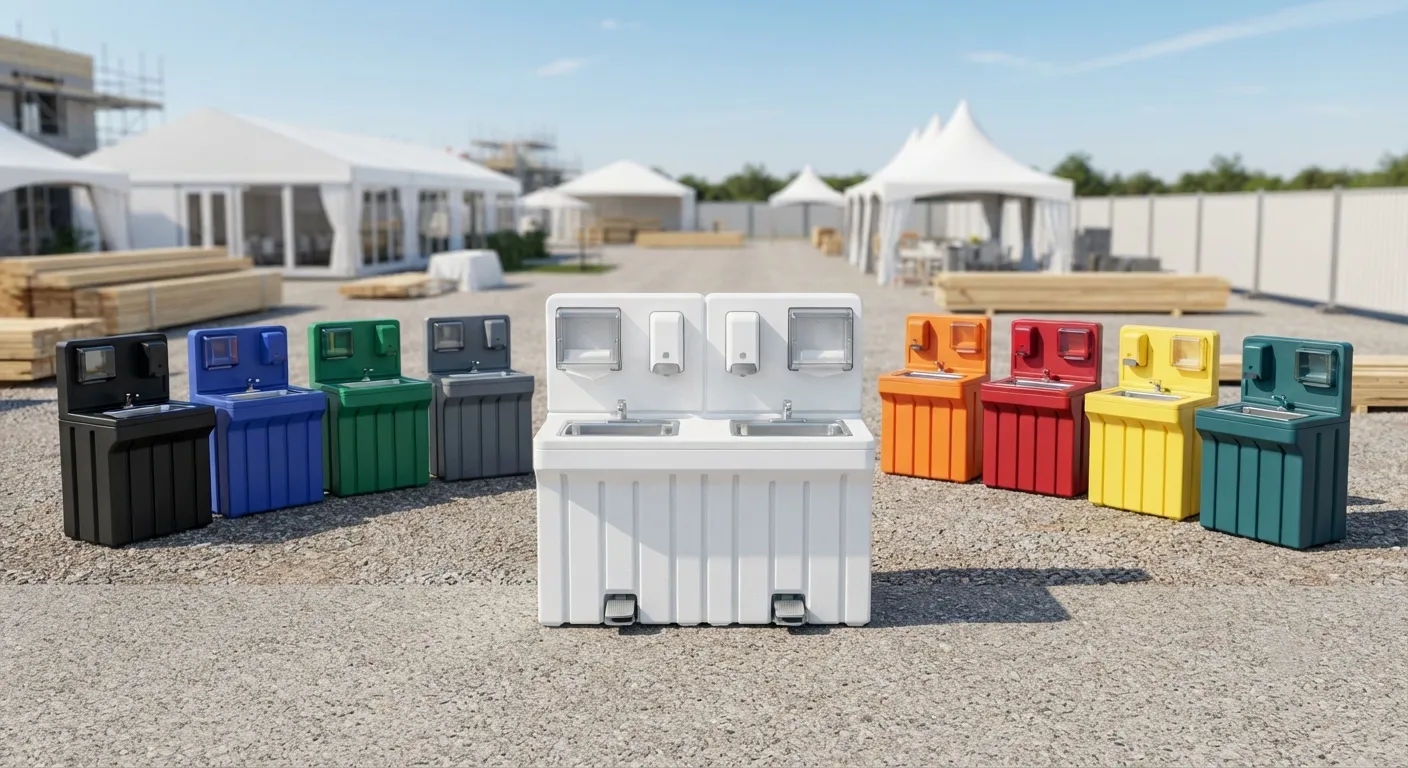
Yes, especially at aid stations serving food or gels. A handwashing station placed near restrooms keeps lines from crossing and meets basic sanitation expectations for spectators and volunteers alike.
How close can restrooms be to the finish line?
As close as your layout allows, provided the access path stays clear. We use porta potty placement guidance to keep units out of the runner chute while still reachable within a short walk.
Next step
Get a delivery date
Tell us the address, the dates and the headcount. We size the order and confirm the route.